Clinical and digitization infrastructure
CerviAssistAI is embedded in a real clinical workflow at a cytology laboratory:
- Pap smears are prepared using standardised collection, fixation and Papanicolaou staining protocols, targeting the typical screening population for cervical lesions.

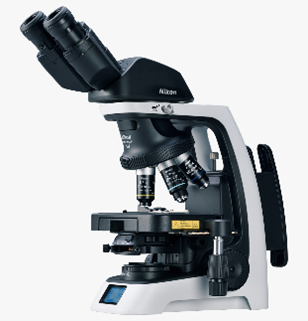
- Slides are digitised with two complementary systems at 40× equivalent magnification, yielding high-resolution RGB images suitable for detailed cellular analysis.
- This setup ensures both flexibility and robustness, while keeping the workflow close to routine practice in pathology labs.
Data and software infrastructure
The data infrastructure follows a file-centric, research-friendly design:
- The database is organised into separate layers for slides, microscopic fields and individual cells, with explicit separation between squamous and glandular cells and detailed Bethesda risk labels.
- Dedicated datasets store bounding boxes, binary masks and derived features required by the detection, segmentation and classification algorithms, in line with WP2/WP3 deliverables.
- A custom ingest tool automatically integrates newly annotated data into the central structure, keeping metadata, slide IDs, fields and cell coordinates consistently linked and traceable.
Platform and tools
The CerviAssistAI platform is being built incrementally, starting from tools already used in practice:
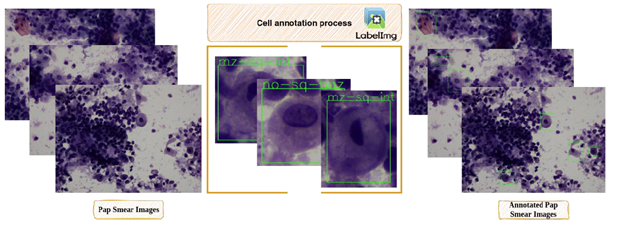
- A doctor-facing marking application allows pathologists to view digitised fields and annotate cells of interest directly in the UI. These annotations feed the training pipeline and also serve as an early form of AI-assisted visualisation in the lab.
- The future pilot platform will include a unified backend, extended UI for risk-score visualisation, authentication and logging modules, and a web-based upload and reporting flow, as specified in WP5. The current phase focuses on prototypes and design skeletons for these components.
Governance, quality and risk management
CerviAssistAI is framed by a structured governance and quality-assurance framework:
- A dedicated work-package (WP0) covers project, data, quality and risk management, including regular hybrid project meetings, progress monitoring against milestones and quality indicators, and corrective actions when acquisition rhythms deviate from plan.
- Specific quality reports document performance indicators for data, algorithms and dissemination, and are used as reference tools in day-to-day project monitoring.
- Laboratory guidelines are being developed for anonymised data handling and Bethesda labelling procedures, ensuring that the AI pipeline operates on coded data in line with GDPR and best clinical practice.
Together, these infrastructures — clinical, data, software and governance — position CerviAssistAI as a realistic, clinically grounded platform that can evolve from research prototype to robust decision-support tool for cervical cancer screening.